
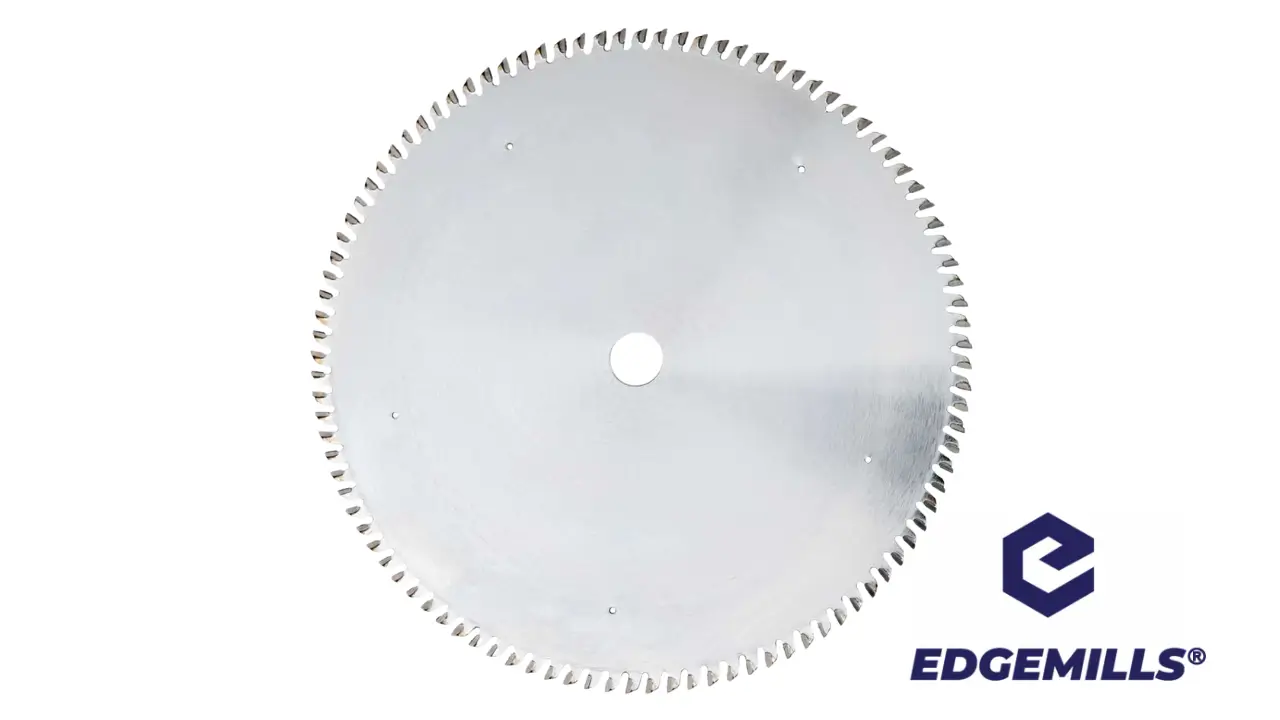
If you have ever cut clear acrylic with a wood blade, you already know the result. It becomes a frustrating, sticky, melted mess. Friction creates too much heat. This ruins your project with chipping and sticky, re-welded waste. For serious makers and professionals, this is not a small problem. It means wasted money, material, and valuable time. Edgemills knows you need a precision cut from industrial knives and blades manufacturers. This is why we brought you this complete guide on how to choose a circular saw blade for plastic industry.
Cutting plastic well means forgetting your wood-cutting habits. It requires a specific blade design, the right machine setup, and a few pro techniques. This guide will teach you everything. You will learn how to pick the best blade for cutting plastic. Specifically, you will choose the right circular saw blade for plastic. You can achieve a perfect, smooth finish every single time. Stop guessing and start mastering non-melt cutting.
Material Types and Their Challenges
Choosing a circular saw blade for plastic starts here. You must understand the material itself. Plastic is not one thing. It is a family of polymers. Each one has unique properties. These dictate exactly how you must cut it. This explains why an easy, one-size-fits-all blade often fails. It leads directly to the problems of melting or chipping.
How Different Plastics Behave Under a Saw
We need to review two key plastic categories:
| Plastic Type | Behavior | Key Cutting Challenge | Best Approach |
| Acrylic (Plexiglas®) | Hard and brittle (Thermoset). It chips easily, but does not truly melt. | Chipping and cracking are big risks. | Use a high tooth count and slow entry/exit. |
| Polycarbonate (Lexan®) | It is soft, but very tough (Thermoplastic). It has higher heat resistance. | Watch for gumming, melting, and material vibration. | Use a negative rake and a consistent feed rate. |
| PVC, ABS, HDPE | These have low melting points and varying hardness. | Melting and heavy gumming are common. | Use TCG blades, low friction, and cooling. |
The main point is this. Brittle plastics, like thick acrylic, need a gentle, high-tooth shearing action. This prevents chipping. Soft, gummy plastics, like PVC or thin HDPE, need a low-friction action. This stops material buildup and melting.
What to Look for in a Circular Saw Blade for Plastic
The saw is just the engine. The blade is the actual machine knife doing the work. To get a precision cut on any polymer, you need specialty plastic cutting saw blades. This blade must overcome the material’s low melting point and its brittleness.
Triple-Chip Grind (TCG) vs. Others
The most vital feature of a circular saw blade for plastic is its tooth configuration. You must select the TCG.
- Triple-Chip Grind (TCG): This blade is best for plastic. The TCG design alternates teeth. One is a flat-top tooth, and the next is a trapezoidal tooth. The trapezoidal tooth first rough-cuts the center of the path. The flat tooth then cleans up the corners. This design reduces friction and contact area. It scrapes the material, acting like a planing tool. This drastically reduces heat.
- Other Grinds (ATB): The standard ATB is great for wood. It tries to slice the plastic like a knife. Too much contact generates too much heat. This causes immediate melting.
What Works (Negative, Zero, or Small Positive) and Why
The hook angle is the tooth face angle relative to the blade’s center.
- Negative Rake: A negative rake angle (like -2 to -6 degrees) is often best. It suits hard and brittle plastics like acrylic. It pushes the material firmly into the backer board. This prevents the edge from lifting and chipping.
- Zero or Small Positive Rake: This can be used for softer plastics, like thin polycarbonates. A zero or small positive rake (up to +5 degrees) works. The TCG configuration must be in place. This gives fast material removal without extra friction.
How Many Teeth You Need
The rule is simple: More teeth means a smoother cut.
- High Tooth Count: Many teeth take smaller bites. This means less shock and less contact time. This is how you fight the heat. Look for 80-tooth or 100-tooth blades. These are for 10-inch or 12-inch saws.
- Blade Diameter: Your blade diameter dictates the tooth count. Always use the maximum number of teeth possible. This gives the coolest, smoothest results.
Carbide-Tipped Blades Benefits
You need a premium blade material for long life and excellent blade sharpness. Tungsten carbide is the best choice for plastic. It stays sharper longer than high-speed steel. It has great wear resistance. This higher quality justifies the cost. TCG carbide blades are better than cheaper options.
We are industrial knives and blades manufacturers. We suggest contacting us at Edgemills. We can design truly customized TCG blades. These blades will meet specific polymer tolerances.
Machine Setup & Compatibility
Even the best blade for cutting plastic can fail. The problem is often an improperly set-up machine. Focus on alignment, speed, and stability.
Ensuring RPM / SFM Compatibility
Surface Feet per Minute (SFM) is the cutting speed. Plastic needs a specific SFM range. Acrylic, for example, needs 6,000 to 14,000 ft/min.
- Check Max RPM: Check your blade’s maximum RPM rating. It must be higher than your saw’s speed. It is dangerous to exceed the blade’s RPM limit.
- The Problem of Too High Speed: High RPM on a large blade creates too much heat. This causes localized melting. Use a variable-speed saw if you have one.
Adjusting Blade Projection / Depth (Table Saw Secret)
For table saws, set the cutting depth carefully. The blade should rise only slightly above the material. About 1/4 to 1/2 inch is perfect. This seems wrong, but it is critical:
- Reduced Contact: This minimizes the blade’s contact time with the plastic.
- Chip Ejection: It creates the best angle for chip and dust reduction. This lets heat escape quickly.
Minimizing Wobble: Run-out and Alignment
Blade run-out, or wobble, causes too much friction. This results in chipping and melting. Ensure your saw’s arbor is totally clean. The blade must be tightly secured. Use the proper stabilizers. Poor alignment quickly dulls a blade. It will also ruin your cut.
Cutting Techniques for Plastic
This part teaches you the finesse you need. You will achieve that perfect smooth finish. As machine knife experts, we share our best pro tips.
Feed Rate: Go Slow, But Not Too Slow
The right feed rate is the key difference. It separates a perfect cut from a melted edge.
- Too Slow: The blade rubs the material. This creates too much heat. The plastic will start melting.
- Too Fast: The teeth aggressively attack the plastic. This results in chipping.
- The Balance: Use a firm, consistent, non-stalling feed. Let the blade’s TCG geometry do all the work. If you hear a high-pitched squeal, your feed is too slow.
Clamping and Support
Plastic sheets, especially polycarbonate, can shake violently. This causes chatter marks and chipping.
- Full Support: Always put a backer board under the plastic. Use MDF or plywood. This supports the material right where the cut finishes. It prevents breakout, which is exit chipping.
- Zero-Clearance: Use a zero-clearance throat plate on a table saw. This wood or plastic piece supports the material next to the blade. It virtually stops vibration-induced chipping.
Thermal Management Beyond Basics
You must control heat. This is vital for heat resistance.
- Compressed Air: This is highly effective for clear, thin plastics like acrylic. A gentle blast of air cleans chips and removes heat.
- Water / Lubricant: For thick or deep cuts of certain plastics, use a light lubricant. Beeswax, plastic cutting soap, or water works well. They significantly reduce friction.
When you cut complex profiles, use the same rules as for a metal cutting circular saw blade. Focus on controlled feed rate and cooling.
Cutting Stacked Sheets / Gang Cutting
This technique is efficient, but it is risky.
- Clamping: Clamp stacked sheets tightly. They must be supported underneath.
- Feeds: The total thickness is greater. Use a slightly slower feed than for a single sheet.
Safety & Health Considerations
Edgemills is a responsible industrial knife manufacturer. Safety is our priority.
PPE: Face Shield, Dust Mask / Respirator
Plastic cutting makes fine, abrasive blade dust.
- Dust: Always wear a P95 or better respirator. Plastic dust is harmful to your lungs.
- Fumes: Is the plastic producing smoke or an acrid smell? It is melting. Ensure you have great ventilation. This manages the fume risk.
Safe Handling of Blades
Carbide tips are brittle. This is true for a TCG blade with a negative rake. They can chip if they are dropped or hit. Always handle the blade by its body, not its tips. Store it properly to protect the teeth. Treat it like you would store Paper cutting Knives.
Disposal / Cleanup of Plastic Chips / Swarf
Plastic chips are often electrically charged. They stick to everything. Use a dedicated shop vacuum and a HEPA filter. Always dispose of these chips responsibly.
Maintaining and Caring for Your Plastic-Cutting Blade
Maintenance extends the life of your expensive TCG blade. The cost is high. The return on investment (ROI) comes from its long lifespan.
When and How to Sharpen Non-Melt / TCG Blades
Do not wait until the quality is clearly poor. Sharpen TCG blades only when needed. This specific geometry needs a professional to sharpen it. They must maintain the precise rake and chip angle. A professional custom blade manufacturer must do this. Trying to sharpen it yourself will ruin the blade.
For blade protection, see our guide on Plastic Cutting Blades storage.
Cost vs Benefit: Calculating ROI Circular Saw Blade for Plastic
A $150 circular saw blade for plastic cutting saves you money. It lasts 100 hours and prevents 80% of your scrap. This is much cheaper. A $30 blade causes $500 in waste and 10 hours of downtime. The ROI for quality industrial blades is clear.
Real-World Use Cases & Mistakes
You can find lots of advice online. Not all of it is correct.
Common Pitfalls
Many DIY forums recommend flipping a standard ATB blade. This turns the positive rake into a scraping action. DO NOT DO THIS.
- Crucial Safety Risks: Running a blade backward is dangerous. It is not what the saw is designed for. It places massive stress on the blade, arbor, and motor. This can cause the blade to break immediately. Use a proper TCG blade instead.
Pro / Shop-Level Scenario
For high-volume work, stacking sheets (gang cutting) is efficient. We suggest a powerful 12-inch or 14-inch saw. Use a custom, large-diameter TCG table saw blade for plastic from Edgemills.
Top Recommended Blades for Plastic
When selecting the best blade for cutting plastic, look for specific labels. Look for “Plastic/Acrylic” or “Non-Ferrous” materials. Key features must be a negative rake and TCG.
| Blade Example | Target Material | Key Feature |
| Freud D1080N (or similar) | Acrylic, Polycarbonate (Thin to Medium) | 80T, TCG, Negative Rake |
| Forrest No-Melt | Thick Acrylic, HDPE, PVC | 60T/80T, TCG, Anti-melt Technology |
You can use a fine-toothed ATB blade temporarily if you cut wood and plastic. But you need a dedicated TCG for a professional, smooth finish.
Conclusion Circular Saw Blade for Plastic
Mastering the circular saw blade for plastic is about finesse, not power. The secret is the Triple Chip Grind (TCG), a negative rake angle, and a consistent feed rate. Focus on the right blade material. Pay attention to your setup. Especially check clamping and blade projection. Do this, and you stop melting and chipping.
Stop accepting melted edges. You deserve a professional, smooth finish.
Ready to find the ideal plastic cutting blade for your toughest material? Get a Quote Today.
FAQs
What is a circular blade?
A circular blade is a flat, disk-shaped cutting blade. It has teeth or abrasive blade segments around its edge. It spins at high speed using a machine. This machine is often a circular saw or table saw. These blades cut wood, plastic, masonry, and metal. Their specific blade material and geometry determine the cutting material.
What is a circular saw blade used for?
A circular saw blade for plastic makes straight cuts. It is used for fast, precision-cut work in construction. Different types of blades exist. They cut many things, including wood (Wood Cutting Blades), metal, and plastic cutting saw blades. They offer speed and high efficiency. Other saws cannot match this.
What are the three types of circular saw blades?
There are three main classifications of circular saw blade geometry, based on the tooth shape. They are: ATB (Alternate Top Bevel, for cross-cutting wood), FTG (Flat Top Grind, for ripping wood), and TCG (Triple Chip Grind). TCG is the best blade for cutting plastic. It is also used for hard materials like laminate and non-ferrous metals.
Which blade is used in a circular saw machine?
The blade depends on the material. An ATB or Combination blade is used for wood. Concrete needs an abrasive blade or a diamond blade. Acrylic needs a special TCG circular saw blade for plastic. This prevents chipping and melting. Always select a blade whose maximum RPM is correct for the saw.
What size are circular saw blades?
Circular saw blades come in standard blade diameter sizes. This depends on the tool they fit. Common sizes are 7.25 inches (handheld saws), 10 inches (miter and table saws), and 12 inches (larger saws). Industrial machine knives use blades up to 24 inches or more.