
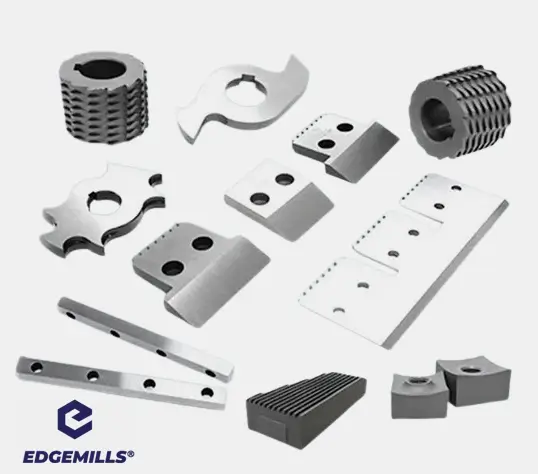
If your plant processes high volumes of polymers, the knife is your operation’s backbone. Whether you’re recycling industry scrap or slitting delicate film, the cutter’s performance controls your product quality and profit. A poor blade causes increased dust, thermal creep, and costly downtime. The expertise of industrial knives and blades manufacturers is therefore crucial. An industrial plastic knife is never just a simple tool.
It is a highly engineered machine blade. It’s built to resist extreme abrasion, heat, and force. Edgemills knows investing in the highest quality blades is investing in operational efficiency. This guide covers everything. We will explain industrial knife types, material choices, maintenance, and the vital Cost-to-Consume analysis. This will maximize your return on investment.
Industrial Plastic Knife Types
The term industrial plastic knife is very broad. It covers many precision machine knives used in polymer manufacturing and the recycling industry. Understanding what each blade does is the first step toward optimization.
Granulator / Pelletizer Blades
These blades are the workhorses of the recycling industry. They are tough, heavy-duty industrial blades. They chop bulky plastic scrap into small, uniform pieces. Think of them as a massive food processor for materials. This includes bottles, sheet trim, or car bumpers. The resulting pellets or granules are then suitable for re-melting. The system uses stationary bed knives and rotating rotor knives.
Slitter / Film Knives
These blades are active in the packaging and converting sectors. Their primary job is to cut light, flexible materials. This includes foil, plastic film, or flexible packaging. They must achieve a precision cut. They often feature an extremely sharp, pointed tip. They include circular knives for rotary slitting or crush-cutting. They also use industrial straight blades for perforating.
Shredder Knives / Rotary Knives
They perform the initial size reduction and crushing of very thick or large scrap. These rugged industrial knife blades can handle high impact and shock. They prepare the raw material for the granulators’ finer work.
Cut-Off Knives & Shear Blade
These are generally curved or straight cutting knives. They are used in many manufacturing steps. They cut packaging materials, extruded profiles, or sheets to the right length. The Shear Blade action delivers a swift, clean cut on thick plastics.
Material & Design Considerations for Industrial Plastic Knife
The blade’s performance relies on its geometry and materials. It’s the science behind the edge.
Metallurgy: Steel Grades, Carbides, and Coatings
Choosing the steel involves a crucial trade-off. You balance hardness (wear resistance) against toughness (resistance to cracking/chipping).
- D2 / High-Carbon Tool Steel: This steel offers excellent wear resistance and hardness. It is moderately priced. It’s an ideal choice for general-purpose shredding and granulating tough, clean plastics.
- Tungsten Carbide: This is the superior choice for extreme wear resistance. It’s necessary when you process highly abrasive materials. This includes plastics with dirty recycled content, glass fiber, or mineral fillers. It costs more upfront. However, its longevity often makes it a better investment.
- High-Speed Steel (HSS): This material is excellent for slitting. It suits applications needing a very fine edge and high-speed cutting. It’s often used for cutting knives in film conversion.
Blade Geometry
The edge angle and bevel must be fine-tuned. This allows the blade to shear the plastic cleanly. It must avoid crushing or melting it. A highly polished surface finish is also vital. This smooth finish helps with heat resistance. It reduces the friction that causes melting and polymer dust.
Durability vs Cost Trade-off
When you compare tool steel to tungsten carbide, focus on the “Cost per Ton.” If your material is highly abrasive, a tungsten carbide knife might cost 4 times more. Yet, it could last 10 times longer. This creates a much lower operational cost. We happily offer custom solutions to meet both your durability and budget requirements.
How to Choose the Right Knife or Blade
Choosing the right industrial plastic knife is about matching the blade’s ability to your process needs.
Matching Knife Type to Plastic Application
The type of plastic dictates the required blade. For example, processing flexible, soft packaging needs a circular slitter for a precision cut. Cutting rigid, thick HDPE needs a robust granulator blade. That blade must be made from high-toughness steel to manage impact shock. The principles are similar to selecting metal cutting blades.
Machine Compatibility and Customization
Never risk using an incompatible blade. Check the knife holder structure, shaft diameter, and machine RPM. Many heavy-duty industrial knives need specific thicknesses and precise mounting holes. This is why you should partner with a custom blade manufacturer like Edgemills. We ensure complete safety and perfect integration.
Throughput & Volume Considerations
High-throughput operations require minimal downtime. Investing in custom industrial blades is smart. These blades use advanced coatings and need less regrinding. This saves many hours of machine stoppage. Batch processes, in contrast, might allow for a cheaper, standard knife.
Maintenance Planning
You must have a solid regrinding and inspection schedule ready. A knife must be pulled for regrinding before the wear becomes permanent. This proactive planning is essential to maximize the knife’s total lifespan.
Optimizing the Cutting / Recycling Process
Operational fine-tuning changes a good industrial plastic knife into a powerful, high-performance asset.
Best Practices for Machine Setup
The simplest, most effective step is checking the alignment. Knives in shredders and granulators must be gapped and aligned perfectly. Misalignment, even minor, causes excessive heat, uneven wear, and early blade failure. Always use the manufacturer’s tolerances for setting knife clearances.
Speed, Feed, and Engagement
You must avoid “shock loading.” This happens when large, heavy plastic pieces hit the knives too fast. Adjust the feed rate. Keep the material flow consistent. Tune the machine’s RPM for the best shear action. Quality and heat resistance are more important than sheer speed.
Monitoring Knife Health
Start a daily visual inspection routine. Look for thermal discoloration, which signals extreme heat. Check for signs of micro-chipping. Timely Plastic Cutting Blades rotation and regrinding is your best defense. It prevents catastrophic failure and downtime.
Safety & Risk Management
Safety protocols for large industrial knives protect personnel and expensive machinery.
Blade Handling Safety
Large industrial blades are both incredibly sharp and heavy. Always use proper lifting equipment and specialized handling tools during installation or removal. Wear cut-resistant gloves. Carbide blades are brittle. They can chip if dropped or roughly handled.
Operational Risks
A fractured knife inside a granulator or shredder can seriously damage the machine’s housing and rotor. You must regularly inspect the knives to lower this risk. Ensure the knives are secured tightly to prevent detachment. Follow the manufacturer’s specifications.
Environmental and Health Considerations
Processing many plastics creates fine plastic dust and hazardous fumes. This is especially true for heavily dyed or PVC materials. High quality respirators and factory ventilation are non-negotiable health steps. Dispose of fractured or worn knives correctly. Follow all local industrial knife waste guidelines.
Maintenance & Life Cycle of Industrial Plastic Knife
The cost-effective life of an industrial plastic knife depends entirely on the quality of its maintenance.
When and How Often
Regrinding should be frequent. You should remove the absolute minimum material possible. This maximizes the total number of regrinds. We recommend working with experienced industrial knife manufacturers. They will know the exact clearance angles and bevel required. Poor regrinding harms cutting quality and shortens the knife’s life.
Storage & Handling
When not actively being used, industrial knives must be stored safely. Use specialized boxes or racks. The sharp edge must be protected from any impact. Never stack knives without protection. This creates a handling hazard and dulls the edges.
Cost-to-Consume Analysis
This is your most important business metric. Divide the knife’s total cost (sharpening costs + purchase price) by the total tons of plastic processed. This metric clearly shows the ROI. It proves the value of buying a high quality knife from a trusted blade supplier. It is far superior to a cheap, low-performing alternative.
Case Studies / Real-World Examples
The best example of superior knives is seen in the operational budget.
A top plastics recycler used D2 steel for their dirty, abrasive PET scrap. They switched to tungsten carbide granulator knives from Edgemills. Their regrinding cycle jumped from 30 hours to over 300 hours. This significantly reduced labor costs. It also boosted annual throughput by 15%. This result shows the power of engineered industrial blades.
Innovations & Future Trends
The field of knife manufacturing companies is advancing fast. New innovations aim to reduce maintenance and boost performance.
Coatings like TiN (Titanium Nitride) or DLC (Diamond-Like Carbon) are now standard. They greatly reduce friction. This extends the time between regrinds. They offer superior heat resistance. Future trends involve smart knives with built-in sensors. This allows for real-time wear monitoring and predictive maintenance.
Conclusion
The right industrial plastic knife is not an expense. It is a profit center. Success in plastics processing requires several steps. You must choose the right material (steel vs. carbide). You must ensure perfect alignment. You must strictly follow a maintenance schedule. Invest in industrial knives that perform well. They must reduce downtime. They must deliver a better Cost-to-Consume metric.
Ready to audit your current system? Want to upgrade to the highest quality industrial blades? Get a Quote Today.
FAQs
What is the best tool to cut hard plastic?
For high-volume, continuous industrial use, a specialized machine knife system is the best tool. It uses knives made from hard alloys like tungsten carbide or D2 tool steel. For smaller cuts, a circular saw blade for plastic with a TCG geometry is recommended. This helps prevent both melting and chipping.
What are plastic knives called?
In food service equipment, knives made of polymer are usually called disposable utensils or plastic cutlery. In manufacturing, the heavy-duty metal cutters used to process plastics are correctly called industrial knives or industrial knife blades.
What is an industrial knife?
An industrial knife is a high-precision, heavy-duty metal tool. It’s used in machinery across the recycling industry and other sectors. Unlike common kitchen tools, these knives and blades are made from specialized steels. They perform specific functions like slitting, shearing, or granulating materials.
What is a plastic knife used for?
A clear plastic knife (or bulk plastic knives) is used in the food industry to cut soft food. Conversely, a metal industrial plastic-knife processes plastics in high-volume production. It cuts, shreds, or pelletizes hard and soft polymer materials. This ensures the materials are sized correctly for the next steps.
How sharp can you make a plastic knife?
A plastic knife used as plastic cutlery (a single-use cutlery item) is designed to be only sharp enough to cut soft food for safety reasons. In contrast, an industrial plastic knife is made from hardened steel or tungsten carbide. It is sharpened to an extremely fine, precision cut edge. This is needed to cleanly shear abrasive scrap and high-density polymers.