
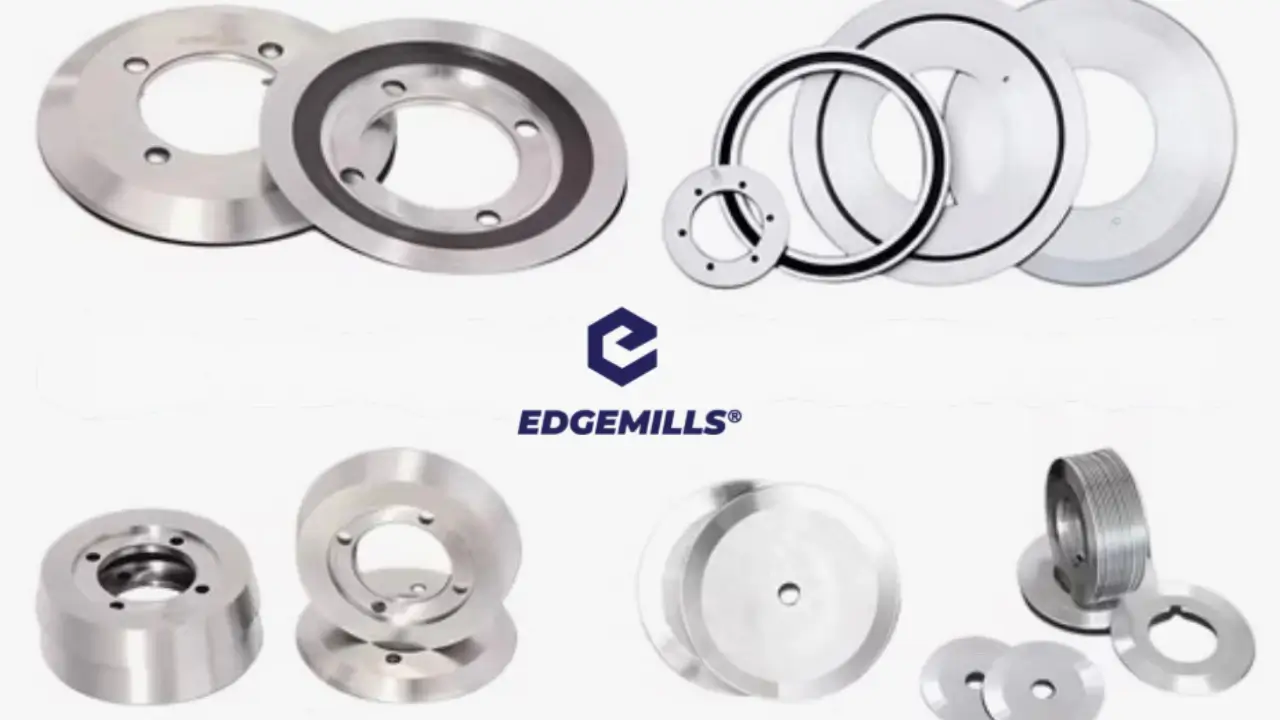
The slitting knife is often just seen as a simple consumable. Think of it as the tire on a race car. It is actually the most critical element. It controls efficiency, waste, and uptime in your material processing operation. In truth, your slitting knife is a precisely engineered investment. Choosing the wrong one is a very common, expensive mistake. That mistake is based on ignoring your application and the total cost. The resulting waste and downtime chew away at your profit margins. Mastering the right slitting knife selection process is vital for staying competitive. This guide gives you an advanced, engineering view. It details the geometry and metallurgy. You can turn your slitting line into a profit center.
What is a Slitting Knife? Types & Mechanisms
The term slitting knife refers to the cutting tool that makes a continuous, lengthwise cut on rolled materials. This includes webs or coils. This process is fundamental in many sectors.
Slitting usually uses a rotary approach. The material feeds between two rotating, matched knives. Slitter knives are engineered for different application type scenarios:
- Rotary Slitter Knife: This is the circular blade that does the actual cutting. These knives include the upper and lower matched sets.
- Shear Slitter: This is the most common system. It works just like scissors. It uses upper and lower circular slitter knives with critical overlap.
- Side-Trimmer Knife: These remove the irregular edges from the original web. This ensures the final product has a perfect width.
These slitter knives are key parts of industrial machinery for material processing. They cut metal coil, paper, film, and composites.
Material Science for Peak Performance
The knife’s material is the biggest factor. It defines its life and cutting performance. Choosing the wrong alloy guarantees premature wear and high CPC.
Key Technical Parameters You Must Specify
To select the correct slitting knife, you must know these core specs.
| Parameter | Why It Matters for Industrial Performance |
| Material / Alloy | Dictates durability, heat resistance, and maximum run-time. |
| Thickness, Width, Diameter | Must meet the manufacturing equipment tolerances precisely. |
| Surface Finish | Affects friction, burr creation, and reduces gumming on plastic. |
| Edge Geometry | Defines the necessary sharp edge and how the knife handles chip load. |
| Tolerance | Crucial for precision cutting setup; prevents wobble and wear. |
Standard Industrial Alloys
The standard industrial knives are reliable but have limits. D2 Tool Steel is the workhorse. It balances toughness and hardness. This makes it popular for paper slitting. However, it often fails on high-speed synthetic films. M2/HSS (High-Speed Steel) is used for specific foils. But its poor wear resistance limits its use versus modern alloys.
The Premium Edge
You need premium materials for high quality cuts and maximum run hours:
- Solid Carbide: Choose this for extreme abrasion. This means cutting materials like fiberglass. Carbide offers exceptional durability. But its brittleness requires very stable setups.
- Cermet (Ceramic-Metal Matrix): Cermet is the ideal material for converting film and foil. It offers superior heat resistance. Cermet minimizes edge buildup, or “gumming.”
- Advanced Coating Technology: Coatings like Titanium Nitride (TiN) boost the slitting knife’s surface. This drastically reduces friction. It is key to stopping sticky materials from adhering to the blade edge.
This commitment to precision cutting metallurgy is crucial. It is a focus across all our industrial knives and blades manufacturers’ products. This same alloy attention is needed for the heavy forces of a Shear Blade.
Eliminating Industrial Slitting Waste
Setup is everything. Even the best slitting knife fails if the machine settings are wrong. We focus here on reducing costly dust, burrs, and web breaks.
The Three Slitting Methods (Matching Method to Material)
The right method prevents product failure:
- Shear Slitting: This method works like scissors. It is the gold standard for paper and many films. It minimizes dust. The upper and lower knives must be perfectly aligned.
- Score (Crush) Slitting: A knife presses against a hardened surface here. It is simple but causes more dust. It suits soft materials like foam.
- Razor Slitting: This uses a simple fixed plastic cutter blade. It slices very thin films and foils at high speeds. It needs specialized mounting and extreme alignment.
The Three Critical Tolerances
Ignoring machine setup ruins the cutting edge. This costs you money.
- Overlap: This is how much the upper knife passes the lower knife. It ensures a clean, dust-free shear cut. Too little causes burrs.
- Clearance (Side Gap): This is the horizontal space between the matched slitter knives. It must be fine-tuned based on the material and blade thickness. Incorrect clearance creates friction and dust.
- Parallelism: This ensures the upper and lower blade faces are aligned. Any slight wobble introduces stress. This causes premature web breaks.
Matching Knife to Application
Choosing the right slitting knife is a science. You balance cost, line speed, and material type.
| Web Material | Key Challenge | Suggested Material / Geometry | Trade-Off to Consider |
| Paper/Board | Dust, Abrasion (coatings/fillers) | D2 or Solid Carbide / Shear Slitting | Higher initial carbide cost vs. lower durability for D2. |
| Synthetic Film | Sticking/Melting, Heat generation | Cermet, Coated HSS / Positive Rake Angle | Cermet’s cost vs. huge gain in uptime and heat resistance. |
| Metal Foil/Thin Coil | Force, Brittleness, Burr | M4 Powder Metallurgy Steel / Deep Bevel | Brittleness requires highly stable manufacturing equipment. |
This decision-making process applies to all heavy cutting tool users. This includes the precise needs of the metal cutting circular saw blade.
Cost, ROI & Total Cost of Ownership
The financial view goes past the price tag. Managers need to know the full TCO.
Cost, ROI & Total Cost of Ownership
The cost of a slitting knife is not just its sticker price.
CPC=Total Linear Feet Cut(Blade Cost+Total Sharpening Cost+Downtime Cost)
When a premium blade pays off: A high quality slitting knife costs more upfront. But if it runs four times longer, it saves money. The reduction in downtime often pays for the premium cost alone.
Common Mistakes & Pitfalls to Avoid
Avoid these errors to protect your slitting knife investment:
- Wrong Tolerance Spec: A cheaper, loose-tolerance knife always causes more waste and vibration. You get what you pay for.
- Ignoring Finish: Overlooking the surface finish causes excessive friction. Plastic quickly gums up the cutting tool.
- Poor Maintenance: Letting the blade edge degrade too much before sharpening causes permanent damage.
Blade Maintenance, Regrinding & Lifecycle Strategy
Maintenance is the key to maximizing durability.
Blade Maintenance, Regrinding & Lifecycle Strategy
The right maintenance requirements extend the life of your expensive industrial knife blades.
- When to Regrind: Never wait until the blade edge is heavily rounded. The best time is when dust generation noticeably increases.
- Regrinding Strategy: Only CNC-precision regrinding restores the original geometry. Poor sharpening shortens the blade’s life. It removes too much material. It compromises the rake angle.
- Handling: Storage and handling are crucial. The sharp edge of a circular slitter is easily damaged by carelessness.
Edgemills focuses on these precise maintenance requirements. Our service restores the original precision cutting characteristics.
Real-World Examples
A high-volume paper converter had chronic dust and weekly web breaks. They were losing $2,000 per break. We replaced their standard D2 knives with Cermet slitter knives. We used a specific coating. Result: Run-time increased by 180%. Waste reduction saved them $4,500 monthly. The higher initial investment paid for itself fast. This proves higher cost is the most profitable decision.
Future Trends & Innovations
The future of the slitting knife means smarter, more efficient material processing:
- Coatings: Advanced Coating Technology, like DLC (Diamond-Like Carbon), further boosts durability and friction reduction.
- Smart Systems: Sensor-enabled blade monitoring will alert operators to regrind timing. This prevents costly failures.
This focus on precision cutting and efficiency applies to all industrial machinery. This includes the heavy-duty needs of the guillotine paper cutter.
Conclusion
The modern slitting knife is a major performance lever. Understanding its geometry, metallurgy, and TCO is the path to profitability. Stop treating your blades as simple commodities. Invest in engineered solutions. Contact us to discuss your web specs. Get a Quote for a custom audit.
FAQs
What is a steel slitting machine?
A slitting machine is industrial machinery designed to cut wide material rolls, called ‘webs,’ into several narrower rolls. It uses sets of matched industrial blades or knives. This is typically the rotary type. It achieves continuous, high-speed, and precision cutting of materials like paper, plastic film, or metal coils.
Can you make a knife out of scrap metal?
You can technically forge a simple metal knife from some scrap metal. But commercial or custom industrial blades, like a slitting knife, need specific alloys. These are often Cermet or powdered metallurgy steels. Only these premium materials deliver the necessary heat resistance and durability for high-volume material processing.
What is the best type of steel for knife blades, and why?
The best steel for slitter knives depends on the application type. For pure durability against abrasion, Cermet or Solid Carbide is best. For general toughness, premium tool steel grades like D2 are strong. Cermet is often preferred. It offers extreme hardness and superior heat resistance.