
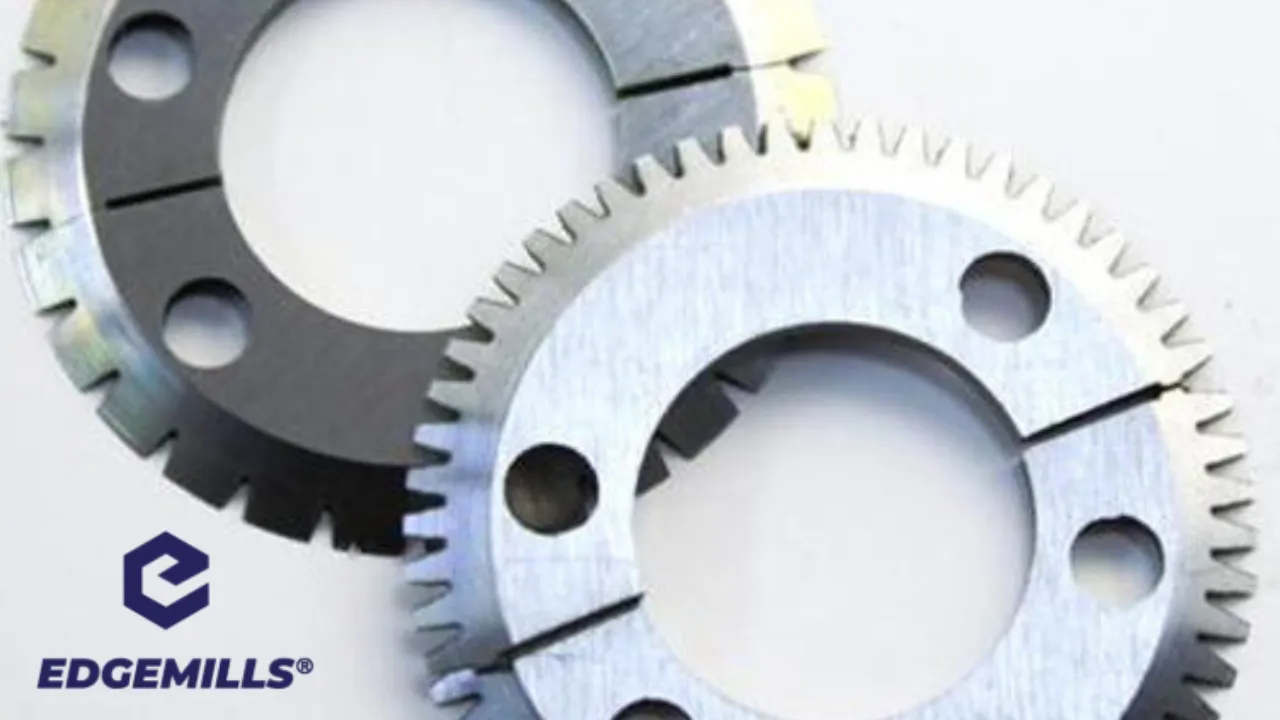
In high-volume manufacturing, the impact of one small tool is huge. The perforation blade often determines your production profits. This specialized cutting tool creates a line of weakness in your material. It works on plastic film, paper, and foil. This lets customers easily tear the product apart.
When an industrial-grade perforation blade fails early, the actual cost is enormous. It’s not just the replacement price. It’s the unexpected machine downtime. It’s all the damaged material you have to scrap. For companies running fast manufacturing equipment, you must truly understand your blades. Knowing the material, design, and proper maintenance is crucial. This knowledge is the key difference between consistent success and major financial loss. This guide details the essential strategies you need. You will start treating your blades as critical business investments.
Mastering the Perforation Process with the Perforation Blade
The perforation process is a delicate but critical step. It creates the tear-line that your customers rely on. Manufacturers using high-speed converting face a big challenge. They must ensure the “tie” has the perfect strength. The tie is the tiny piece of material left uncut. If the tie is too strong, the customer cannot open the package. If it’s too weak, the product tears on the production line. This causes huge waste and stops the packaging machinery.
You need consistently high quality perforation. This demands extreme precision, cutting every time. The blade, the anvil, and the material all interact dynamically. This happens while the material moves at a high speed. Consistency is absolutely non-negotiable. This is especially true for sensitive applications. Think about medical packaging or consumer hygiene products.
The Three Major Problems Hurting Your Profits
Industrial perforation faces three common types of failure. These failures directly reduce your overall profit:
Burr and Fines Formation
This is fine dust or rough, raised material. It stays along the cut line. Burrs signal a dull blade edge or wrong machine clearance. They can easily contaminate your product. They can also ruin the material’s intended function.
Inconsistent Tear Strength
The material tears unevenly. This happens when the TPI (Teeth Per Inch) is not controlled correctly. The cut-to-tie ratio must also be accurate. If the blade edge design is wrong, the products tear too easily. Or they become too hard for the customer to open.
Premature Edge Wear
This is the most expensive problem you can have. It comes directly from friction and excessive heat. Fast dulling requires frequent blade changes. This turns simple maintenance into costly, unplanned machine stops.
Material Matters: Calculating Your True Cost-Per-Cut
Choosing the blade material is your single biggest decision. This is true for any industrial tool. For machines running 24/7, a premium material is the only option. It will reliably minimize blade changes. It will maximize your production profitability. The actual cost of any metal blade is its total long-term operating expense.
| Material | Key Benefits for Industrial Perforation | Best for… |
| Tungsten Carbide (TC) | Extreme Wear Resistance: It lasts 5 to 10 times longer than standard steel. Heat Resilience: It stays hard, even when operating temperatures climb high. | Abrasive films, long production runs, and applications demanding minimum maintenance. |
| D2 Tool Steel | Toughness: It resists chipping and sudden impact shock better. Sharpenability: It is easier to sharpen, which offers good life cycle value. | Thicker board, or if your line risks occasional foreign object impact. |
We encourage our clients to use the True Cost Equation. True Cost = Blade Price + (Downtime Cost per Hour × Number of Changeovers). A simple calculation proves the benefit quickly. The higher cost of Tungsten Carbide is easily justified here. A premium blade almost always results in a lower True Cost over time.
Optimizing Geometry: The Edgemills Precision Advantage
A generic component is not the same as a high-performance plastic perforator blade. The critical difference lies entirely in the geometry or the design. This is where high expertise in precision cutting becomes essential. A blade made for soft tissue paper will break instantly on tough plastic film.
TPI and Pitch Ratio
This fundamental specification controls the final tear strength. We custom-tune this ratio precisely to the micron. This guarantees consistent performance for your unique material perforation substrate.
Perforation Blade Coatings (The Edge Enhancer)
We apply advanced coatings like Titanium Nitride (TiN). These coatings drastically reduce both friction and material buildup. This extends your blade edge life even further. It guarantees a smoother and cleaner final cut.
Edgemills offers high-level engineering solutions, not just products. Our expertise ensures that every blade is a custom-engineered component. They are designed specifically for your industries and the materials you use.
Engineered Solutions for a Wide Range of Applications
Your high-volume facility needs more than just a standard perforation blade. You actually need customized solutions for every production line. You might need a small rotary wheel or a complex straight knife. The geometry must be matched exactly to your speed and your material.
By leveraging Custom Blade Fabrication capabilities, we change your maintenance approach. You will stop reacting to failures after they happen. Instead, you will start scheduling predictive replacements beforehand. This proactive strategy is highly effective. It ensures consistent high quality output. It drastically slashes expensive downtime across your whole operation.
Stop Buying Blades. Start Investing in Uptime
If you replace your perforation blade inventory frequently, you are paying for low quality. Partnering with a specialist lets you focus on your main business. We will fully manage the complexity of your industrial tools.
Are you ready to implement a blade strategy that guarantees consistent quality and reduced downtime?
Get a quote for a custom-engineered Perforation Blade solution today.
FAQs
What is the difference between perforation and die-cutting?
Perforation makes a dotted line of partial cuts. This allows the end-user to easily tear the material later on. Die-cutting makes a complete, continuous cut. Its goal is to fully separate the piece right on the machine. Perforation is used for easy tear-off features.
What Are Perforating Blades and How Are They Used?
Perforating blades are specialized industrial tools. They are used in converting and packaging machinery. They make small, intermittent cuts across the substrate. They work as rotary wheels or straight knives. They create tear lines on paper, film, foil, and plastic.
What is a Cricut perforation blade?
The Cricut perforation blade is a tool for home hobbyists. It is used with personal electronic crafting machines. People use it to create tear-off elements on paper for simple crafts. It is completely different from the strong industrial blades. These blades are engineered for continuous, high-speed material perforation in factories.