
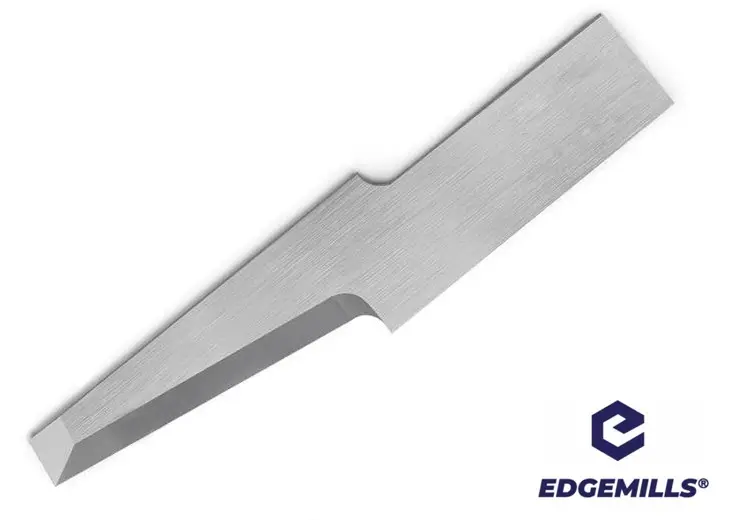
High-quality leather goods production relies on one essential component: the cutting edge. This includes items from luxury footwear to automotive upholstery. Industrial leather knives are not just leather trimming tools. They are high-precision machine components. They are designed to withstand continuous, high-speed usage. This takes place in complex manufacturing environments.
Choosing the right industrial leather knives is crucial for U.S. and Canadian plant managers. The choice directly impacts production consistency and material yield. This guide details the metallurgy and custom engineering required. It will help your factory reduce downtime and achieve flawless cut quality.
What Are Industriall Leather Knives?
Industrial leather knives are highly specialized cutting tools. They are machine-compatible. They are engineered to cut, skive, or split natural and synthetic hides. This is done under immense pressure and speed. Unlike small leather knife tools used by hobbyists, these are large components. They are precision-machined. They must maintain their edge integrity across thousands of cutting cycles.
Industrial vs. Craft Knives
The differences are major. Compare leather cutter tools used by an artisan versus professional blades used in a factory. Industrial leather cutting tools require minute tolerances (often 0.01 mm. They need heat stability and advanced metallurgy. They are designed for machine compatibility, not just the human hand. Their blade life is measured in production runs. This demands superior wear resistance over simple craftsmanship.
Where They Are Used
These high-performance leatherworking tools are vital across many sectors:
- Automotive Upholstery: Cutting large, flawless sections for seats and dashboards.
- Footwear Plants: High-speed processing of shoe components and patterns.
- Belt & Strap Factories: Straight and longitudinal strip cutting requires absolute uniformity.
- Furniture & Leather Goods Manufacturing: Mass production of durable, fitted covers.
Types of Industrial Leather Knives
The industrial leather knives category includes several critical profiles. Each one is optimized for a specific phase of leather processing.
Head Knives / Round Knives
These are often called head knife or half-circle knife profiles. These round leather knives are used primarily for freehand or guided cutting of large patterns. In factories, they are mechanized for accurate template work. Failure usually involves inconsistent edge geometry. This causes dragging.
Skiving Knives
Skiving knives are essential, precision-engineered blades. They are used for thinning leather edges. This process demands extremely tight tolerances. This ensures the entire edge is uniform. Flawless precision cutting is mandatory for clean seams and professional finishes.
Splitting Blades
These long, specialized blades ensure the hide is split precisely. It must be of uniform thickness. Heat stability is critical for splitting blades. Continuous friction can deform a poorly manufactured edge. They are fundamental for maintaining material quality.
Clicker Press / Die Knives
These industrial leather knives are high-impact tools. They stamp out hundreds of identical pieces quickly. They require high impact resistance and consistent die height. Their performance is judged by how cleanly they sever the material. They must not tear the edge.
Straight Industrial Blades
These are crucial knives for cutting leather into strips and belts. Leather belt cutting tools demand the longest, straightest edge possible. The cuts must be longitudinally precise. This prevents material waste. For slicing materials in packaging, we offer a range of Paper Cutting Blades.
Custom OEM Knives
These industrial leather knives are manufactured from custom CAD drawings. They are designed to fit proprietary machines. They perform specific, unique cuts. They are the ultimate solution for high-volume factories. They need machine-specific precision cutting.
Custom vs. Standard Blades
The decision between a standard blade and a custom-engineered solution depends on your required performance. It is a matter of scale.
Standard Blades
Standard blades are cost-effective. They work on low-volume or varied leather crafting tasks. While accessible, they often only meet generalized tolerances. They may not achieve the optimal cut quality required for premium products.
Custom Blades
Why custom industrial leather knives outperform:
- Geometry: The bevel and grind are optimized for a specific machine. They match the leather thickness.
- Tolerances: We guarantee 0.01 consistency. This is crucial for stitching accessories and fit.
- Material Optimization: Steel is chosen precisely for your leather type. It matches your production speed.
- Reduced Downtime: Custom knives last longer and maintain performance. This drastically reduces knife changes.
Metallurgy Simplified: Material Options for Industrial Knives
The performance of an industrial leather knife is decided deep within its structure. Edgemills uses advanced materials to achieve different results.
D2 Tool Steel
D2 Tool Steel is a cost-effective material. It offers high wear resistance for general leather cutting tools. It is reliable for consistent production cycles in many standard factories.
M2 High-Speed Steel (HSS)
M2 HSS is superior for long production cycles. It offers excellent heat resistance under continuous, high-friction use. This material is a workhorse for maintaining edge integrity over time.
Tungsten Carbide
Tungsten Carbide offers the longest possible lifespan. It is the best tool to cut leather when dealing with abrasive or exotic leathers. Its use significantly reduces replacement frequency. It also lowers associated labor costs. If you need robust edges for heavy-duty rubber, consider our Plastic Cutting Blades solutions.
Stainless Steel (300/400 Series)
This is used where corrosion resistance is mandatory. Examples include clean rooms or high moisture environments. It ensures longevity even under challenging conditions.
CPM Specialty Steels
These premium steels are created through the Crucible Particle Metallurgy process. They feature a uniform carbide structure. They deliver high-end industrial performance. They are ideal for the most heavy-duty production lines.
Machinery Compatibility
Achieving a clean, accurate cut starts with perfect machine-to-blade alignment.
Compatibility Across All Major Machines
Edgemills manufactures industrial leather knives. They are guaranteed to fit:
- Fortuna
- Camoga
- Atom
- Sutton
- And various custom OEM machines.
Why Compatibility Matters
Correct saw compatibility ensures precise alignment. This is essential for cut consistency. A slightly incompatible blade can lead to rapid machinery protection failure. It damages expensive components beyond the knife itself.
Industrial Pain Points & How Premium Knives Solve Them
Edgemills addresses the core problems faced by users of leather machinery. This includes U.S. and Canadian industrial knife manufacturers.
Quick Wear & Breakdowns
Professional blades made from superior steel (M2 or Carbide) drastically extend the edge life. This reduces the frequency of replacements.
Inconsistent Cutting Quality
CNC precision manufacturing ensures absolute bevel accuracy. This eliminates the inconsistency that plagues lower-quality leather cutting knife options.
Downtime
Premium, long-lasting knives reduce the need for knife changes. They also reduce re-sharpening cycles. This converts directly into increased production uptime.
Overseas Supply Problems
Edgemills offers a North America–friendly supply chain. This ensures stable QC and reliable delivery. It eliminates the headaches of overseas supply inconsistencies.
Cutting Thick / Exotic Leathers
Material-based recommendations, like Tungsten Carbide, provide the necessary stiffness and durability. This is for thick or challenging hides. This answers which is the best knife for cutting leather in demanding scenarios.
Tight Tolerance Requirements
Guaranteed 0.01 tolerances are achieved through multi-axis CNC machining. This ensures perfect patterns. It eliminates fit issues in final assembly. For other industrial processes requiring extreme accuracy, view our Metal cutting blades catalog.
Quality Control Failures
Our rigorous QC process checks hardness, bevel, finish, and geometry on every batch. This guarantees consistent quality tools.
How to Choose the Right Industrial Leather Knife
Selecting the correct industrial leather knives is a systematic choice. It is based on your production variables.
Based on Leather Type
A detailed material selection chart is needed. For instance, soft garment leather needs a different grind than dense saddle leather.
Based on the Machinery
Match the blade to the machine’s model and specifications. The leather trimming tools must be an exact fit.
Based on Production Volume
High-volume production lines must prioritize Tungsten Carbide for longevity. Low-volume may opt for D2 steel. This defines the overall cost-per-cut.
Based on Performance Lifespan
We can calculate the cost-per-cut. Spending more on a premium blade significantly lowers the long-term operational expense.
Why Premium Knives Matter for U.S. & Canadian Manufacturers
North American manufacturers face high labor costs. They also have strict QC expectations. Premium industrial leather knives ensure high throughput. They maintain precision cutting. This meets customer demand for precision in complex assemblies. When standard tooling fails, Edgemills provides Special Cutting Knives. These uphold those stringent standards.
Why Edgmills
Edgemills is the premium, engineering-backed source for industrial leather knives.
Engineering-first Manufacturing
We use advanced CNC machining. This delivers ultra-precise tolerances. Simple blade manufacturers cannot match this.
Material Expertise
We expertly handle all five key steel categories. This guarantees the optimal material for your specific task.
Custom OEM Capabilities
We specialize in custom industrial blades and shapes. This ranges from CAD drawings to manufacturing based on a sample blade.
Rigorous QC
Every knife undergoes hardness testing. We also perform dimensional checks and bevel accuracy verification.
Reliability
We ensure fast communication. We provide consistent product quality. Our North American supply chain is reliable. This eliminates dependency on unpredictable overseas industrial knives and blade manufacturers.
FAQs
What is the best steel for cutting leather?
The best tool to cut leather in high-volume industrial settings is a high-grade Tungsten Carbide or M2 High-Speed Steel. Carbide offers unmatched wear resistance and longevity for abrasive leathers. M2 HSS provides excellent heat resistance during continuous operation. This is critical for maintaining edge integrity in U.S. and Canadian factories.
How long do industrial knives last?
The lifespan of industrial leather knives varies greatly. It depends on the material (steel vs. carbide) and the leather type. It is also affected by machine speed. Premium, custom-machined professional blades often last 3-5 times longer than standard ones. Their tolerances and metallurgy are optimized for the precise factory environment. This reduces the need for constant resharpening.
Do custom knives perform better in factories?
Yes, custom industrial blades always perform better in factory settings than generic knives. This is because they are engineered to match the exact specifications. They match the hook angles and power output of a specific OEM machine, like Fortuna or Camoga. This perfect fit ensures superior precision cutting. It eliminates alignment issues. It drastically improves material yield.
Will a better knife reduce downtime?
Absolutely. Investing in premium industrial leather knives is a direct strategy. It reduces costly downtime. A superior cutting tool maintains its edge for longer. This significantly reduces the frequency of blade changes and resharpening. It also reduces resulting machine stoppages. This optimization is key to profitability for U.S. and Canadian industrial blades manufacturers and users.
How precise are Edgemills knives?
Edgemills knives are manufactured to industry-leading tolerances. This is typically 0.01 mm on critical dimensions like bevel angle and geometry. This CNC-driven precision cutting ensures that every leather cutter tool is aligned in the machine. This is necessary to meet the quality control standards of the automotive and furniture industries.