
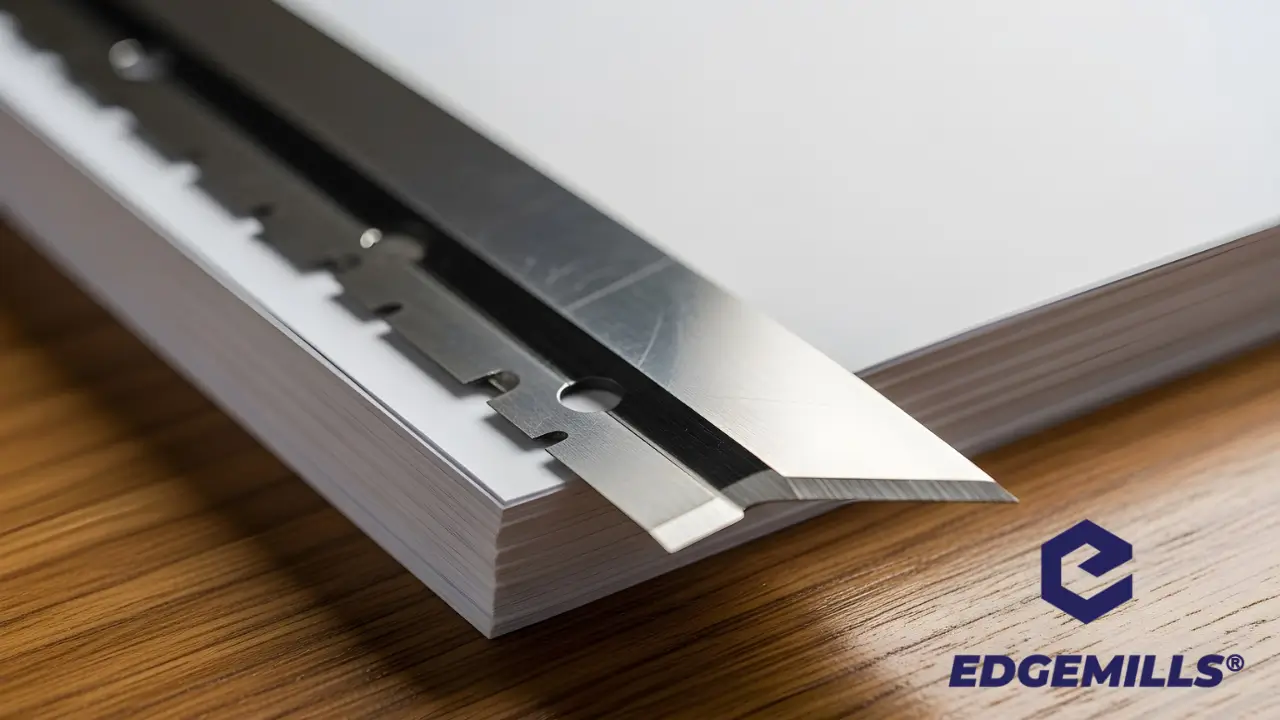
In the busy world of packaging, precision is always a top priority. An industrial perforation cutter is a very smart cutting tool for factories. It creates clean tear lines by making small, repeating slits in materials. Unlike a standard blade, a perforation blade leaves small “ties” of uncut material. This keeps the product in one piece until a user separates it. In 2026, the demand for perforation cutter blade industrial parts is very high. Modern manufacturers use advanced materials to keep up with very fast speeds. They need cutting efficiency that can handle over 2,000 feet per minute.
Finding the right industrial knives is vital for paper and film products. If a blade edge gets dull, the ties can become very messy. This leads to product failure or jagged edges that look quite bad. Many industrial blade manufacturers now use high-tech coatings on their production lines. This guide looks deep into the types and uses of these cutters. It helps you find the best precision and efficiency for your machines. Whether you use newsprint or laminates, your cutting machines must be ready. Edgemills, we provide these high-quality solutions from our facility in Houston.
Perforation Cutter Quick Types Table (2026 Industrial Standards)
| Type | Mechanism | Tooth Pitch | Speed Capacity | Primary Industry |
| Rotary | Continuous Rolling | 0.5–2.0mm | High (>1500 fpm) | Labels & Flexible Film |
| Guillotine | Vertical Chop | 1.0–8.0mm | Medium | Tickets & Forms |
| Slitter-Perf | Inline Circular | Micro (45+ TPI) | Ultra-High | Web Converting |
| Crush-Perf | Anvil Pressure | Variable | High | Corrugate & Tissue |
Types of Perforation Cutters
Industrial cutters are defined by how the machine moves during the work. Each machine blade is designed to cut based on the material web. In 2026, many shops moved toward integrated slitter-perf systems. These systems allow for slitting and perforating at the exact same time. This helps to reduce the total footprint of the conversion line.
Rotary Cutters
Rotary units use circular machine knives that roll over the passing material. This is a very common type for large rolls of labels. Since the motion never stops, these cutters work at very high speeds. A high-speed rotary perforation cutter often uses a hardened anvil wheel. This ensures the sharp blade teeth penetrate the material without any vibration. It prevents a common issue known as “web weave” during production.
Guillotine Blades
The guillotine paper cutter blade style moves in a vertical, chopping motion. This is the best method for flat sheets of paper or card. It offers great power when you are cutting thicker materials in stacks. Many binders use these for “tear-out” coupons in various books. When buying a replacement blade for guillotine paper cutter units, check the TPI. The blade must be thick enough to handle the strong downward force.
Slitter-Perf Tools
For the hardest jobs, slitter-perf blades are the best choice for you. They are often mounted on the same shaft as standard Paper Cutting Blades. Micro-perforation reaches 45 TPI to create a very clean, invisible tear line. This precision cutting is only possible with very high-end CNC grinding. We also use premium metal shear blade technology for these fine profiles.
Pitch and Profile Specs
The success of a cutter depends on its unique tooth geometry. If the teeth are too small, the material will tear much too early. If they are too large, the consumer cannot separate the product. This balance is found in the “cut and tie” relationship. In math, the pitch (P) is the cut plus the tie.
P = C + T
Tooth Pitch and TPI
The tooth pitch determines how often the blade hits the material. TPI, or Teeth Per Inch, measures the density of the perforation. A higher TPI is ideal for cutting lightweight, thin papers. A low TPI is used for heavy corrugated board or plastic. This creates a “robust tie,” so the package stays safe during shipping.
Blade Profiles
Top blade manufacturers offer several shapes for a specific cut application today:
- Triangle Profile: A very common type for standard paper and cardstock.
- Scallop Profile: This rounded edge works great for Food Cutting Blades use.
- Wave Profile: These are specifically designed to slice through thick textile fibers.
The “gullet depth” of the tooth is also very important here. If it is too shallow, paper dust will quickly build up. This causes the blade to lose its cutting efficiency very fast. Modern Special Cutting Knives now feature special self-cleaning designs.
HSS vs. Carbide Materials
The material of your perforation cutter blade industrial part drives your costs. While carbon steel works for short jobs, modern shops need more strength. Stronger alloys help to reduce downtime during a very busy work week.
High-Speed Steel (HSS)
HSS is a popular choice for many basic paper-cutting tasks. It offers a good balance of overall toughness and edge sharpness. However, recycled paper often contains grit that can dull HSS quickly. A paper trimmer knife in an office works well with HSS. But industrial plants need higher durability for their 24/7 production lines.
Tungsten Carbide
For abrasive films or glossy papers, a carbide perforation knife packaging solution is best. Carbide is much harder than steel and stays sharp much longer. This allows the sharp blade to last 10 times longer than HSS.
Carbide Plastic Cutting Blades cost more, but the ROI is great. You will see a massive reduction in expensive machine stops. In a fast line, a blade change can cost a lot of money. By using high-quality paper cutting carbide, factories run for weeks. You will not need a replacement blade nearly as often.
Common Industry Applications
The perforation cutter is used in almost every consumer goods sector. In 2026, several key areas show growth in precision and efficiency. These tools help businesses create better products for their customers.
Packaging and Films
Food packaging often uses “Modified Atmosphere Packaging” (MAP) for freshness. This requires a perforation cutter to create tiny, breathable micro-holes. These blades are specifically designed to make holes as small as 50 microns. Without this precision cutting, fresh produce would spoil very quickly.
Labels and Adhesives
In the label industry, the “liner” needs a clean perforation. A rotary cutter must “kiss-cut” the label without hitting the liner. This requires a metal blade with perfectly straight and accurate movement. At Edgemills, we grind our blades to very tight industrial tolerances.
Medical Documents
Medical tapes and bandages rely on Leather Cutting Machine Blades for tearing. Security documents like checks also use these complex “micro-perf” patterns. This prevents tampering and ensures the paper does not get damaged.
Perforation vs. Slitting
Many people ask about the perforation cutter vs slitter difference today. While they look similar, they have two very different goals.
- The Slitter: Uses a continuous flat blade for a clean, precise cut. It separates the material web into two or more pieces.
- The Perforation Cutter: Uses an intermittent blade edge to make a line. It leaves a “tie” so the roll stays strong while winding.
- The Crush Cutter: These use Wood Cutting Blades style wheels with extreme pressure. This “crushes” the fibers apart on thick tissue or foam.
Using the wrong type of blades can cause a web break. This leads to hours of cleanup and lost production time. Matching the cut application to the tool is how you win.
Solving Common Problems
Even the best high-speed lines have issues with their blades. Recognizing symptoms of wear early can save a lot of money. You should check your perforation cutter blade industrial parts often.
Skipping and Burrs
If the line is “skipping,” the issue is usually machine alignment. In rotary systems, a small wobble can cause the teeth to miss. If you see “burrs,” you likely have a dull, sharp blade. The tooth is no longer slicing but is punching the paper. This ruins clean, precise cuts and increases the resistance to wear. Using Special Cutting Knives with TiN coatings can help.
Tear Failure
If the product is too hard to tear, the tie is too big. If the product falls apart, the cut is too deep. Fine-tuning your TPI is the best solution for this problem.
Houston Carbide Precision
When you cannot afford a failure, you need a strong partner. Edgemills is a top maker of high-precision industrial straight blades. We also make circular perforation knives for customers around the world. We combine old craftsmanship with new 2026-era CNC technology.
We offer:
- Custom tooth pitch and profiles for any factory machine.
- Tungsten Carbide TCT for 10x longer life in packaging.
- Very tight tolerances for the best precision and efficiency.
- Support for major brands like Boston 2615 replacement blade styles.
We do not just sell blades; we sell cutting efficiency. We invite you to get a Quote Today for your shop. See the difference a high-quality perforation cutter can make.
Conclusion
The humble perforation cutter is the unsung hero of the modern industrial economy. From the medical bandages that protect us to the shipping boxes that deliver our goods, this tool ensures that products are both secure and accessible. In 2026, the key to staying competitive lies in the transition to better materials like Tungsten Carbide and more precise geometries. By focusing on durability, resistance to wear, and efficient cutting, you can transform your conversion line into a high-profit center. Trust Edgemills for all your industrial knives and blades manufacturers’ needs. We are here to help you find the perfect edge for your most challenging projects.
FAQs
What is a perforation cutter called?
A perforation cutter is also known as a perf blade, a slitter-perf, or an industrial toothed knife. In the printing industry, it is frequently referred to as a “tear-line tool” or a “strike-perforator” for guillotine machines. These tools are essential for creating the “cut and tie” patterns that allow consumer goods to be easily separated by hand.
Can you replace a perforation cutter blade?
Yes, perforation blades are designed to be replaced as they are considered “wear parts” in high-volume industrial machines. Most rotary and guillotine systems feature a quick-change mechanism to allow for a replacement blade to be installed with minimal downtime. Using a high-quality paper trimmer replacement blade ensures that your production line maintains its original speed and safety standards.
How to replace the perforation cutter blade?
To replace the blade, first, ensure the machine is completely locked out and tagged out according to safety protocols. For rotary systems, loosen the set screws on the blade collar and slide the old machine blade off the shaft, taking care to avoid the sharp teeth. Slide the new blade into position, ensuring it is perfectly perpendicular to the anvil, and tighten it to the manufacturer’s torque specifications.
How to sharpen a perforation cutter blade?
Sharpening a perforation blade requires a specialized CNC grinder capable of maintaining the exact tooth pitch and gullet depth. Unlike a flat metal blade, a toothed blade cannot be easily sharpened by hand without ruining the TPI ratio. It is highly recommended to send your blades to a professional industrial knife manufacturer’s facility to ensure the edge is restored to its original factory precision.