
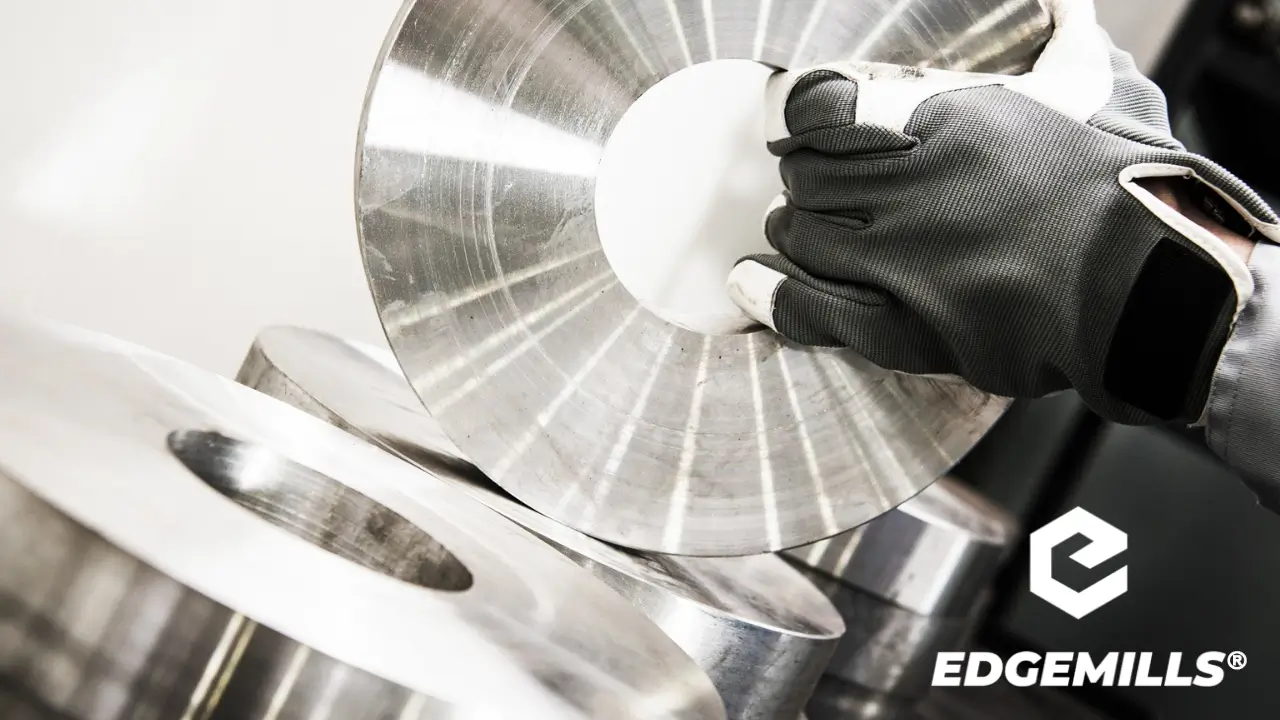
In the world of modern manufacturing, slitter blades are the tools that keep production moving. These specialized industrial knives cut large rolls of material into smaller, specific widths. You can find them processing paper, plastic film, metal foil, and even textiles. The success of a factory depends on the quality and sharpness of these tools. As we look at 2026, the need for precision has grown significantly. Modern lines now run at speeds faster than 2,500 feet per minute. This requires slitter blades that can hold a tolerance of 0.001″. They must also handle high heat without losing their strength or edge.
A good slitter blade does much more than just make a cut. It must separate material without changing its shape or original quality. When machines run 24/7, friction and heat can damage the material edges. Today, manufacturers focus on blades that stop “dusting” and “angel hair.” These are tiny scraps that can ruin food or medical packaging. High-end blade manufacturers now use sub-micron tungsten carbide to solve this. They also use PVD coatings to ensure a clean cut every time. This guide will show you how the right blades can save a factory $42,000 yearly.
How Slitter Blades Work
You must understand how slitter blades work to improve your process. These industrial knives are built for rotary or tangential cutting actions. The process is about more than just having a sharp edge. It involves material hardness, edge geometry, and the machine’s tension levels. In 2026, these blades work with smart systems that monitor heat.
Precision is the main goal for industrial machine knives. Even a tiny wobble will create a wavy edge on your material. This leads to poor roll density and fails in packaging machines. Top industrial knife manufacturers use CNC grinding to make the surface smooth. This smoothness lowers friction, which is the biggest enemy of blade life.
The rake and bevel angles must match the material you cut. A blade for soft paper is different from one for plastic. By working with a custom blade manufacturer, you can find the perfect fit. This helps your company reach “zero-defect” production goals during every single run.
Main Types of Slitting Methods
The method you choose depends on the thickness and fragility of your material. There are three main ways to use these industrial blades today.
Razor Slitting for Thin Films
Razor slitting is the cheapest and most precise way to cut thin films. It uses a stationary machine blade to slice through a moving web. In 2026, most plastic plants use a “razor-in-groove” setup for better stability. This allows for higher speeds without the material wandering or becoming uneven.
When using Plastic Cutting Blades, edge quality is your top priority. A dull razor will melt the plastic edge due to high friction. This causes the layers on the roll to stick together tightly. Modern razor slitter blades often have ceramic coatings to keep them cool.
Shear Slitting with Scissor Action
Shear slitting uses two circular knives that act like a pair of scissors. This setup includes a top blade and a bottom anvil blade. It is the best choice for heavy paper, laminates, and foils. Shear slitter blades give the best edge quality because they support both sides.
There are two ways to set this up:
- Wrap Shear: The web wraps around the bottom knife for extra stability. This is perfect for paper-cutting blades in high-speed printing.
- Kiss Shear: The web only touches the point where the blades meet. Use this for sensitive coatings that might get damaged by contact.
Crush Slitting for Nonwovens
Crush slitting is also known as score cutting in many industrial plants. It uses a circular machine knife that is pressed against a hard sleeve. Instead of slicing, the crush cut slitter blades pinch the material apart. This method is very fast to set up for different widths.
Better Materials for 2026
The material of your industrial knife blades decides your total operating costs. High-Speed Steel (HSS) has been the standard for a very long time. However, the 2026 market is moving toward much harder and stronger alloys. This helps machines handle tough recycled materials and thick multilayer plastic composites.
Carbide vs. Steel Blades
Carbide slitter blades use tungsten carbide particles held together by cobalt. These blades are so hard that they rarely wear down like steel. For abrasive materials, carbide lasts 10 times longer than standard steel options. This means you spend much less time on blade changes every week.
High-Performance Blade Coatings
To make blade durability even better, many industrial blade manufacturers offer coatings:
- Titanium Nitride (TiN): This gold coating adds hardness and lowers friction levels.
- Diamond-Like Carbon (DLC): This is perfect for cutting through very sticky adhesives.
- Ceramic Coatings: These act as a heat shield during high-speed film cutting.
| Material Type | Hardness (HRC/HRA) | Best For | Relative Lifespan |
| D2 Tool Steel | 58–62 HRC | Paper and foil | 1x |
| M2 High Speed Steel | 62–66 HRC | General use | 1.5x |
| CPM 10V Metal | 60–64 HRC | Abrasive webs | 5x |
| Tungsten Carbide | 90–92 HRA | Plastics | 10x |
When cutting strong alloys, use metal shear blades made of shock-resistant steel. This stops the edge from chipping when it hits hard material.
Industry Specific Applications
Every industry has its own problems when it comes to cutting and slitting. A general slitter knife approach often leads to high waste and downtime.
Packaging and Plastic Films
Packaging plants now use very thin but strong “microlayer” plastic films. These require a very sharp slitting machine blade to avoid tiny nicks. If the edge isn’t perfect, the film will snap during final packaging. Using Special Cutting Knives ensures a smooth finish and prevents these failures.
Metals and Industrial Foils
Cutting copper or aluminum foil requires specialized Metal cutting blades. These blades must stay sharp without the metal sticking to the edge. This “cold welding” creates a ragged cut that ruins the entire roll. Cryogenic treatment is a top 2026 trend used to solve this problem.
Food and Medical Industries
In food plants, hygiene is just as important as the sharpness. Food Cutting Blades must be made from high-grade, rust-resistant stainless steel. In medical manufacturing, Leather Cutting Machine Blades are often used for surgical drapes. These blades must cut with zero fiber pull-out for safety.
The Science of the Cut
To get precision slitting, you must focus on the microscopic edge geometry. Custom slitter blades are made with several very important technical dimensions:
- Blade Diameter: Standard sizes range from 2 inches up to 20 inches. Larger blades run cooler, but they need more power from the motor.
- Blade Thickness: Thinner blades produce less waste but are much less stable. Thick blades are better for Wood Cutting Blades and heavy tasks.
- Bevel Angle: A 30° angle works for most films on the market. A 45° angle is better for tough materials to prevent edge chipping.
- Edge Radius: A perfectly sharp edge is actually too weak for industrial use. A tiny radius provides the strength needed for high-speed impact.
Why Alignment Matters
Even expensive rotary slitting blades will fail if the alignment is wrong. If blades are off by 0.002″, they will rub together too hard. This creates heat that softens the steel and ruins the edge. Using laser tools is the best way to extend blade life.
How the Right Blades Save Money
Focusing only on the price of industrial knives is a big mistake. You must look at the cost of downtime and wasted material. Every minute the machine is stopped for a change costs your company.
The Real Math
- Steel Blade: Costs $25 and lasts for only 8 hours of work.
- Carbide Blade: Costs $180 but lasts for 160 hours of work.
By using Edgemills products, you save $2,000 in blade costs every month. You also gain nearly 60 hours of extra production time. If your machine makes $500 an hour, that is $29,700 in value. Total savings can easily top $42,000 for every machine you run.
Maintenance and Sharpening Tips
A good slitter blade replacement plan must include a professional sharpening schedule. In 2026, the best services use “Superabrasive” wheels and high-pressure coolant. This keeps the blade’s structure safe from heat damage during the grinding.
- When to Sharpen: Do not wait for the blade to fail completely. Pull blades for service when they reach 80% of their expected life.
- Cleaning: Use safe cleaners to remove sticky residue from wear resistant slitter knives.
- Storage: Always store your blades vertically in racks to prevent edge damage.
Why Choose Edgemills?
As a top custom industrial blades maker in Houston, Edgemills offers great quality. We do more than sell industrial straight blades and circular knives. We provide cutting solutions that help your plant grow and stay profitable. Our facility uses 5-axis CNC grinding to ensure every machine knife is perfect.
Whether you need a simple razor or a complex custom slitter blade, we can help. We focus on lowering your “cost-per-cut” in every industry we serve. Our team is ready to help you improve your production line today.
Conclusion
The slitter blade is the silent engine of the modern global economy. These cutting tools make the products we use every single day possible. By choosing carbide slitter blades and keeping them aligned, you stay competitive. You will see better results and higher profits in your factory.
Do not settle for “good enough” when it comes to edge quality. A single web break can cost you thousands in lost production time. Precision is the only way to stay profitable in this industry.
Ready to make your production line more efficient? Our engineers are ready to find the best slitter blades for production for you. Get a Quote Today and see how Edgemills can improve your cutting and your bottom line.
FAQs
Where to buy industrial slitter blades?
You should buy industrial slitter blades from a custom blade manufacturer like Edgemills. This ensures you get the right metal and precision for your machines. Buying direct gives you expert advice that general sellers cannot provide. You also get access to special coatings that make blades last longer. This helps reduce your lead times and lowers your overall costs.
What is a slitter blade used for?
A slitter blade is used to cut large rolls of material into smaller widths. These blades work inside slitter-rewinder machines at very high speeds. They use razor, shear, or crush methods to cut with great accuracy. They are vital for making food packaging, tapes, and medical supplies. Without these blades, most modern manufacturing would come to a complete stop.
Can slitter blades be sharpened?
Yes, you can sharpen high-quality industrial slitter blades many times to save money. The process uses CNC grinders to remove a tiny layer of worn metal. This restores the factory edge without changing the blade’s original cutting angle. You must use a service that keeps the blade cool during grinding. This prevents the metal from becoming brittle or prone to breaking.
How long do Edgemills’ slitter blades last?
Edgemills’ slitter blades last 3 to 10 times longer than standard steel blades. We use high-grade Tungsten Carbide and special heat treatments to achieve this. Many of our customers run blades for over 100 hours without stopping. This reduces the number of times you have to stop your machines. Investing in these blades lowers your total cost of ownership significantly.