
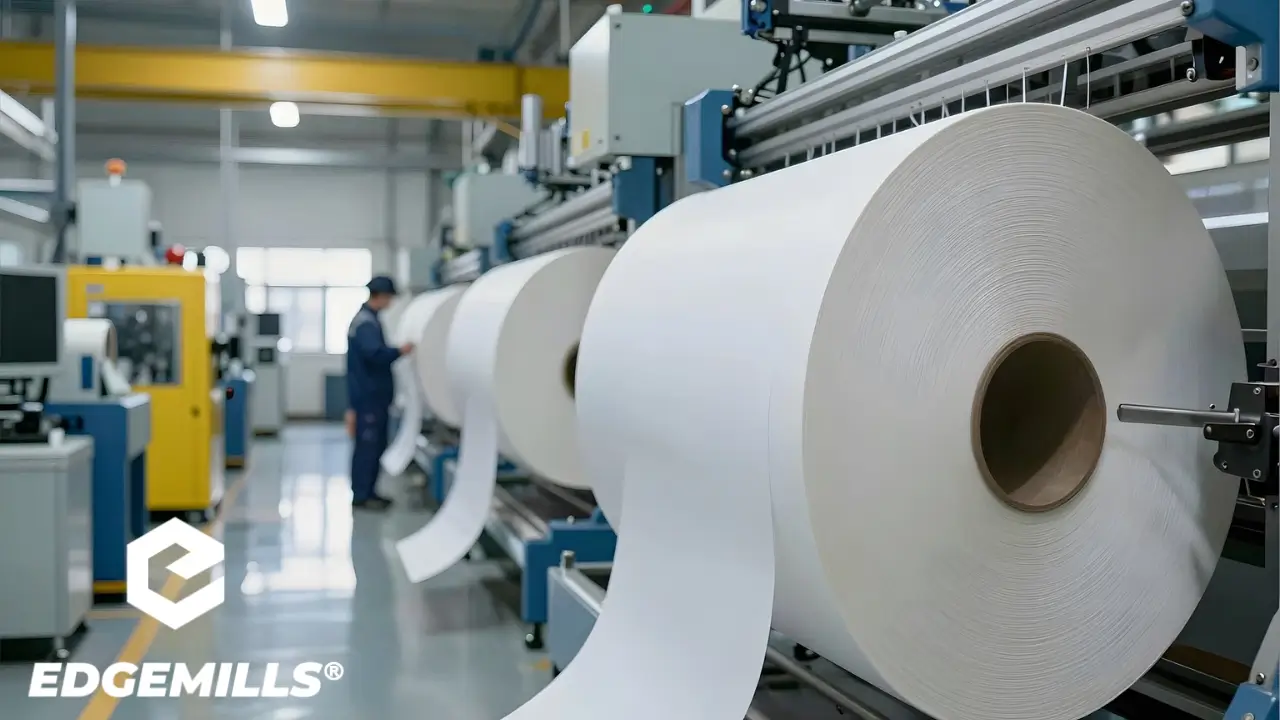
In the world of factory work, the slitting machine is vital. This tool converts giant rolls into many smaller and narrower webs. In 2026, factories need this speed to stay competitive and grow. A sharp Rotary Blade is the most important part of this tool. Using a high quality Rotary Blade prevents costly waste and errors. These machines help brands create thin films for food packaging bags. A bad cut will lead to huge amounts of wasted raw materials. The converting industry unlocks billions of dollars in value every single year. Modern machines can process miles of material in just a few minutes.
Large rolls are often too wide for the final manufacturing steps. A slitting machine fixes this by partitioning the roll into strips. This process is often called roll-to-roll processing by expert engineers. For example, giant aluminum rolls are cut down for candy wrapping. Without this machine, we could not make small rolls of tape. Modern 2026 systems use AI to monitor every single cut made. This ensures that every edge is clean and perfectly straight every time. High-volume converters can lose fifty thousand dollars from poor cuts. By using Edgemill’s tools, shops can stop these big financial losses. Advanced metals help these machines reach a new level of precision.
The Economic Impact of Industrial Slitting
| Industry Sector | Annual Slitting Volume | Scrap Cost | Potential Savings |
| Flexible Packaging | 85 Billion Dollars | 15% Waste Rate | 47,000 Dollars Yearly |
| Paper Converting | 62 Billion Dollars | 15% Waste Rate | 40% More Uptime |
| Metal Coil Slitting | 48 Billion Dollars | 15% Waste Rate | 5x Blade Life |
Simple Guide to Slitting Machine Purpose and Mechanics
To understand these machines, you must look at the three stages. These stages are the unwind, the slitting, and the rewind steps. Each part of the machine must work in perfect harmony today. Whether you use a paper or a metal machine, the goal stays.
The Unwind Stage: Managing the Big Roll
Every job starts at the unwind stand with a jumbo roll. This roll can be many meters wide and very heavy too. The main goal here is to manage the web tension correctly. If the tension is too low, the material will surely bunch. If it is too high, the material might stretch or snap. Modern systems in 2026 use sensors to keep the tension steady. The math for this process is actually very simple to follow:
T = TR
In this formula, T stands for the tension on the web. The letter T represents the torque applied by the brake system. Finally, R is the radius of the roll as it spins. As the roll gets smaller, the machine must reduce the torque. This keeps the material flat as it moves toward the knives.
The Slitting Station: Where the Cut Happens
This is where the material meets the sharp Rotary Blade assembly. The type of blade used depends on the material being cut. For plastic film slitting, engineers often choose very thin razor blades. For steel coil slitting, heavy metal blades are the best choice. Dull blades will cause burrs and dust on the finished product. This stage is the most critical for achieving a perfect result.
The Rewind Stage: Building the Final Rolls
After the material is cut, it must be wound up again. A duplex slitter uses two shafts to keep rolls from sticking. Many 2026 systems use special shafts called differential winding shafts now. These shafts allow each roll to tighten at its own speed. This fixes problems caused by materials that have uneven thickness levels.
Understanding Slitting Methods: Razor vs Crush vs Shear
Choosing the right method is a big deal for every shop. This choice depends on how thick or sensitive the material is.
Shear Slitting for Premium Results
Shear slitting is very popular for high-accuracy industrial cutting jobs. It uses two rotating blades that act like a pair of scissors. This method is the best way to get a clean edge.
- Best For: Heavy paper, thick films, and all metal foils.
- Main Benefit: It creates the least amount of dust and debris.
- Tool Choice: You should use high quality Metal cutting blades here.
Razor Slitting for High Speed Films
In this method, sharp razor blades stay in one fixed spot. The material moves past the blade at very high speeds daily.
- Best For: Thin plastic films like BOPP and thin ribbons.
- Main Benefit: It is very cheap and very fast to set up.
- Tool Choice: Most shops use specialized Plastic Cutting Blades for this.
Crush Slitting for Durable Materials
This method uses a round knife that presses against a roller. It crushes the material to separate it into two clean pieces.
- Best For: Sandpaper, non-woven fabrics, and heavy medical bandages, too.
- Main Benefit: It works well for materials that have sticky adhesives.
12 Important Industrial Uses for Slitting Machines
The slitting machine is used in almost every major factory today. Its versatility allows it to work in many different global sectors.
- Flexible Packaging: This industry uses these machines for food pouch rolls. Plastic Cutting Blades ensure that every bag is sealed perfectly tight.
- EV Battery Making: Clean cuts on copper foil are vital for batteries. Any small error could cause a short circuit in the car.
- Paper Mills: Large mills use Paper Cutting Blades to make smaller rolls. This prevents paper breaks when the rolls go to the printer.
- Medical Field: Slitters process surgical tapes and thin foils for pill packs. These machines must stay very clean to meet high safety rules.
- Metal Processing: Factories use metal shear blades to cut large steel coils. These blades must handle huge pressure without ever breaking or chipping.
- Tape Production: Every roll of tape starts as a very wide roll. Slitting machines cut them to the widths you see in stores.
- Textile Industry: Soft materials for diapers are cut using the crush method. Speed is very important for these types of high-volume products.
- Car Parts: Gaskets and heat shields start as large rolls of material. They are slit to size before being installed in new cars.
- Aerospace Foils: Special insulation for satellites needs a very high precision cut. Even a tiny mistake can cause a failure in deep space.
- Building Materials: Roofing rolls and vapor barriers are slit to standard sizes. This makes them much easier for construction workers to use daily.
- Wood Veneers: Luxury furniture strips are cut using sharp Wood Cutting Blades. This creates the beautiful patterns you see on expensive wooden tables.
- Electronics: Flexible circuits for new phones need very narrow and clean slits. This requires the highest level of accuracy from the cutting machine.
Why Machine Blades Matter for Industrial Efficiency
A slitting machine is only as good as its cutting tool. Even an expensive machine will fail with a bad Rotary Blade. As a top manufacturer, Edgemills knows that quality is everything.
Choosing Between HSS and TCT Metals
Many standard blades use a material called High Speed Steel (HSS). This works well, but it gets dull quickly on hard materials. In 2026, many shops are moving to Tungsten Carbide (TCT). These blades last five times longer than older steel blade types. This means the machine can run longer without stopping for repairs.
The Importance of Precision Engineering
A machine blade must be flat and perfectly balanced every time. If a blade wobbles, it will create a very wavy edge. At Edgemills, we grind blades to very tight tolerance levels now. This allows your machines to run at full speed without vibrating. If your edges look bad, you should get a Quote Today.
Safety Rules and Maintenance for Slitting Machines
Operating these high-speed machines can be very dangerous for workers. Sharp knives and moving rollers are risks that we must manage.
Blade Change Safety Protocols
Never touch a blade while the power is still turned on. You must follow the Lockout Tagout rules for every single change. Use magnetic tools when you move a heavy Rotary Blade assembly. This keeps your fingers away from the very sharp cutting edge.
Keeping the Machine Aligned
Machine vibrations can cause the blade holders to move over time. You should check the alignment every week with a laser tool. This ensures that the widths of your rolls stay perfectly accurate.
Dust Control in the Factory
Slitting paper creates a lot of fine dust in the air. This dust can make motors get too hot during the day. Modern 2026 machines use vacuum systems to suck this dust away.
Why Choose Edgemills for Your Industrial Tools?
Finding a good partner for your blades is very important now. Edgemills is a leader in the 2026 industrial cutting market. We offer custom tools that are built to last a long time.
- Customization: We make blades that fit your specific and unique materials.
- Durability: Our blades have special coatings to stop heat and wear.
- Expert Advice: We help you set up your machine for better results.
Whether you need Food Cutting Blades or metal shear blades, we can help. Our team knows how to make your production line more profitable.
Conclusion Slitting Machine
The slitting machine is the heart of every material converting plant. From thin films to heavy steel, its role is vital. By using a high-quality Rotary Blade, you can stay ahead. Investing in good tools from Edgemills will improve your daily work. We hope this guide helps you understand these complex industrial systems. Remember to keep your machines clean and your safety guards closed.
If you want the best rotary cutter blades for your machines, we are here. You can find everything from 45mm rotary blades to giant shear sets. Our goal is to make industrial cutting simple and very efficient.
FAQs
How tight should a rotary blade be?
A Rotary Blade must be tightened to the exact torque specification. This prevents the blade from moving sideways while it is spinning fast. If the blade is too tight, it may warp the metal. A loose blade will create a wavy and very poor cut. We suggest using a calibrated torque wrench for every single change.
Is it safe to reuse blade bolts?
It is usually not safe to reuse bolts that look stretched. Bolts are under a lot of force while the machine runs. A bolt that breaks can cause the whole machine to fail. Most experts suggest getting new bolts every three times you change. This keeps the machine safe for every worker in your facility.
How long does a rotary blade last?
The life of a blade depends on the material being cut. A standard steel blade might last up to four hundred hours. A TCT blade can last for more than two thousand hours. Hard or abrasive materials will make the blade dull faster. You should check your blades for small chips every single day.
When to replace the rotary blade?
Replace your blade if you see dust or frayed material edges. You should also watch for any changes in the slit width. Modern systems can track how much power the motor is using. A jump in power means the blade is getting very dull. Swapping a blade early is cheaper than throwing away a bad product.